


In the dynamic and demanding field of aerospace engineering, the choice of materials is a critical decision that can significantly impact the performance, safety, and efficiency of aircraft and spacecraft. Among the numerous materials available, titanium alloys have emerged as a top choice due to their exceptional properties. One such alloy, Grade 9 titanium sheet, has garnered considerable attention for its potential use in aerospace applications. As a supplier of Gr9 titanium sheet, I am excited to explore the suitability of this material in the aerospace industry and shed light on its unique characteristics.
Understanding Grade 9 Titanium Sheet
Grade 9 titanium, also known as Ti-3Al-2.5V, is a near-alpha titanium alloy that offers a balanced combination of strength, ductility, and corrosion resistance. The addition of aluminum and vanadium enhances the alloy's mechanical properties, making it stronger and more durable than pure titanium. Gr9 titanium sheet is typically produced through a combination of hot rolling and cold rolling processes, resulting in a smooth surface finish and precise thickness control.
One of the key advantages of Grade 9 titanium sheet is its high strength-to-weight ratio. This means that it can provide the necessary structural support while minimizing the overall weight of the aircraft or spacecraft. In aerospace applications, weight reduction is crucial as it directly impacts fuel efficiency, range, and payload capacity. By using Gr9 titanium sheet, aerospace manufacturers can achieve significant weight savings without compromising on performance or safety.
Properties of Grade 9 Titanium Sheet
- Strength: Grade 9 titanium sheet exhibits excellent tensile strength, with a typical yield strength of around 480 MPa (70 ksi) and ultimate tensile strength of approximately 550 MPa (80 ksi). This high strength allows it to withstand the extreme forces and stresses encountered during flight, including aerodynamic loads, vibrations, and thermal cycling.
- Ductility: Despite its high strength, Grade 9 titanium sheet retains good ductility, which means it can be easily formed and shaped into complex geometries without cracking or fracturing. This property is particularly important in aerospace applications where components often require intricate designs and precise dimensions.
- Corrosion Resistance: Titanium is inherently resistant to corrosion, and Grade 9 titanium sheet is no exception. It forms a protective oxide layer on its surface that prevents the underlying metal from reacting with the surrounding environment, making it highly resistant to rust, oxidation, and other forms of corrosion. This corrosion resistance is essential in aerospace applications where components are exposed to harsh conditions, such as saltwater, humidity, and chemicals.
- Thermal Stability: Grade 9 titanium sheet has good thermal stability, allowing it to maintain its mechanical properties at elevated temperatures. This makes it suitable for use in applications where components are subjected to high heat, such as engine parts, exhaust systems, and thermal shields.
Aerospace Applications of Grade 9 Titanium Sheet
The unique properties of Grade 9 titanium sheet make it well-suited for a wide range of aerospace applications. Some of the common uses of Gr9 titanium sheet in the aerospace industry include:
- Airframe Structures: Grade 9 titanium sheet is commonly used in the construction of airframe structures, such as wings, fuselages, and tail sections. Its high strength-to-weight ratio and excellent corrosion resistance make it an ideal material for these critical components, which need to withstand the forces of flight and protect the aircraft from the elements.
- Engine Components: The high temperature resistance and strength of Grade 9 titanium sheet make it suitable for use in engine components, such as compressor blades, turbine discs, and exhaust nozzles. These components are subjected to extreme heat and stress during operation, and the use of Gr9 titanium sheet helps to ensure their reliability and performance.
- Fasteners and Hardware: Titanium fasteners and hardware are widely used in the aerospace industry due to their high strength, corrosion resistance, and lightweight. Grade 9 titanium sheet is often used to manufacture bolts, nuts, screws, and other fasteners that are used to assemble aircraft and spacecraft components.
- Interior Components: In addition to its structural applications, Grade 9 titanium sheet is also used in the interior of aircraft and spacecraft. It can be used to manufacture panels, partitions, and other interior components that require a combination of strength, durability, and aesthetic appeal.
Comparison with Other Titanium Alloys
While Grade 9 titanium sheet offers many advantages for aerospace applications, it is important to compare it with other titanium alloys to determine the best material for a specific application. Two commonly used titanium alloys in the aerospace industry are Ti-6Al-4V and GR12.

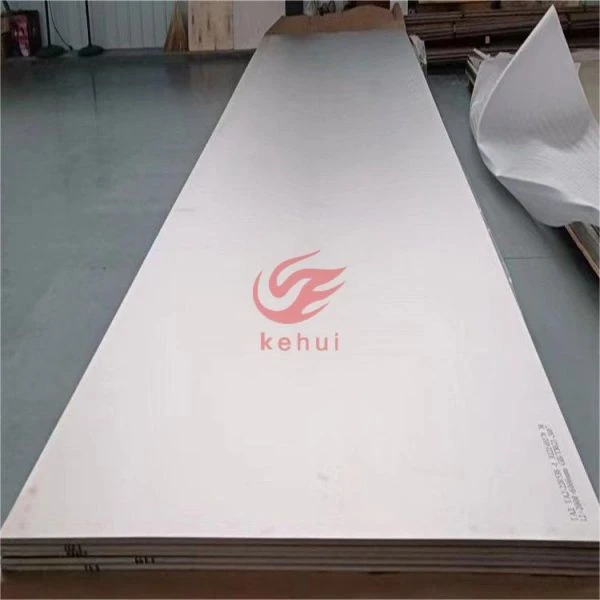
- Ti-6Al-4V Titanium Sheet: Ti-6Al-4V Titanium Sheet is a widely used alpha-beta titanium alloy that offers high strength, good ductility, and excellent corrosion resistance. It is often used in applications where high strength is required, such as aircraft landing gear, structural components, and aerospace fasteners. Compared to Grade 9 titanium sheet, Ti-6Al-4V has a higher strength-to-weight ratio but is also more expensive and less formable.
- GR12 Titanium Plate: GR12 Titanium Plate is a titanium alloy that contains small amounts of molybdenum and nickel, which enhance its corrosion resistance and strength. It is commonly used in applications where corrosion resistance is a primary concern, such as chemical processing equipment, marine applications, and aerospace components. Compared to Grade 9 titanium sheet, GR12 has better corrosion resistance but lower strength and ductility.
Considerations for Using Grade 9 Titanium Sheet in Aerospace Applications
When considering the use of Grade 9 titanium sheet in aerospace applications, there are several factors that need to be taken into account:
- Cost: Titanium is generally more expensive than other metals, such as aluminum and steel. The cost of Grade 9 titanium sheet can vary depending on factors such as thickness, size, and quantity. Aerospace manufacturers need to carefully evaluate the cost-benefit ratio of using Gr9 titanium sheet in their applications to ensure that it is economically viable.
- Manufacturing Processes: The manufacturing processes used to produce Grade 9 titanium sheet can have a significant impact on its properties and performance. Aerospace manufacturers need to work closely with their suppliers to ensure that the sheet is produced using the appropriate processes and meets the required specifications.
- Quality Control: Quality control is essential in aerospace applications to ensure the reliability and safety of the components. Aerospace manufacturers need to implement strict quality control measures to ensure that the Grade 9 titanium sheet they use meets the highest standards of quality and performance.
Conclusion
In conclusion, Grade 9 titanium sheet offers many advantages for aerospace applications, including high strength-to-weight ratio, excellent corrosion resistance, good ductility, and thermal stability. Its unique properties make it well-suited for a wide range of aerospace components, from airframe structures to engine components and interior fittings. While it is more expensive than some other materials, the benefits of using Grade 9 titanium sheet in terms of performance, reliability, and weight savings often outweigh the cost.
As a supplier of Gr9 titanium sheet, I am committed to providing high-quality products and excellent customer service to the aerospace industry. If you are interested in learning more about the suitability of Grade 9 titanium sheet for your aerospace applications or would like to discuss your specific requirements, please do not hesitate to contact me. I look forward to working with you to find the best material solution for your needs.
References
- "Titanium Alloys for Aerospace Applications," ASM International Handbook Committee, ASM International, 2000.
- "Aerospace Materials and Processes," John A. Thornton, McGraw-Hill, 1997.
- "Titanium: A Technical Guide," John C. Williams, ASM International, 1988.