

Latest Products



Contact Us
- Gaoya industrial park, High-tech Development Zone, Baoji city, Shaanxi province, China.
- +86-917-3381220
Baoji Kehui Titanium Industry Co., Ltd. was established in March 2011, and its subsidiary, Baoji Juxinyuan New Materials Co., Ltd., was established in May 2017. It is ahigh-tech enterprise focusing on R&D, production and sales of pipes, rods, plates, wires, forgings and various chemical corrosion-resistant equipment of rare and precious metals such as titanium and titanium alloy, zirconium and zirconium alloy, adhering to the collection of scientific research, manufacturing, sales and service as one of the modern new concept.
Why Choose Us?
High quality
Our products are manufactured or executed to very high standards, using the finest materials and manufacturing processes.
Competitive Price
We offering a higher-quality product or service at an equivalent price. As a result we have a growing and loyal customer base.
Rich experience
Our company has many years of production work experience. The concept of customer-oriented and win-win cooperation makes the company more mature and stronger.
Advanced equipment
With a complete production process of smelting, forging, heat treatment, machining, surface treat.
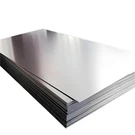
 Zirconium R60705 Plate
Grade:R60705. Specification:T(0.5-50)*W(100-2500)*L(100-6000)mm. Standard:ASTM B551/B551M-12(2017)、ASME SB551/SB551M
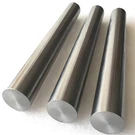
Add to Inquiry Zirconium R60702 Plate
Shape:Plate, wire, pipe, bar, discs, target . Condition:Annealed/coldrolled . Grade:R60700 R60702 R60704 R60705 R60706 . Standard:ASTM B551 . Certificates:ISO9001:2015
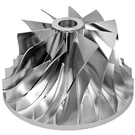
Add to Inquiry B551 Zirconium Plate
Exceptional corrosion resistance, high temperature tolerance, and durability. It can withstand extreme temperatures, pressures, used for chemical processing, industrial, and aerospace.
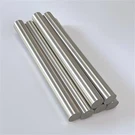
Add to Inquiry High Purity Zirconium Sheet
High purity: Assure maximum performance and consistency. Corrosion resistance: Use in harsh chemicals or extreme environments. High-temperature resistance: Melting point is 1855°C, used in high
Add to Inquiry Zirconium Pure Sheet
Material: Zirconium Pure sheet. Purity: 99.6%. Dimensions: Customizable. Density: 6.51g/cm3. Melting point: 1855°C. Boiling point: 4408°c. Place of origin: Baoji, Shaanxi
Add to Inquiry Zirconium Alloy Plate
Product name: Zirconium alloy platePlace of origin: Baoji, China. Shape: Plate. Surface: Polished or customized. Size: 0.5~20mm thick x width x length. Attribution: Non-ferrous metal. Applicable
Add to Inquiry
What is Zirconium Plate?
Zirconium plates are flat sheets or strips made from high-purity zirconium metal. Zirconium is a silvery-white, lustrous metal which occurs naturally in the Earth's crust in the form of ores and compounds. Once mined, it can be reduced to its pure form, which is highly resistant to corrosion and oxidation, and which has an extremely high melting point.

Strong corrosion resistance: Zirconium plate has good corrosion resistance and can be used in various corrosive environments.
Good high-temperature performance: Zirconium plate has good high-temperature performance and can withstand oxidation and corrosion in high-temperature environments.
Good wear resistance: Zirconium plate has good wear resistance and can be used in various wear environments.
Strong oxidation resistance: Zirconium plate has good oxidation resistance and can be used in an oxidation environment for a long time.
Application of Zirconium Plate
Chemical industry
Due to the corrosion resistance of zirconium metal to acidic and alkaline environments, Zirconium Plates are commonly used in the manufacture of chemical equipment such as chemical reactors, reaction tanks, pipelines and storage tanks.
Nuclear energy field
Zirconium Plates are usually used to manufacture structural and cladding materials in nuclear reactors. Its high-temperature performance and good corrosion resistance make it an ideal choice for fuel rod cladding in the nuclear energy field.
Medical devices
Zirconium metal is biocompatible, so Zirconium Plates are often used in the manufacture of medical devices such as artificial joints, implantable medical devices and surgical tools.
Aerospace industry
In the aerospace industry, Zirconium Plates are commonly used for high-temperature engine components, turbine blades, aerospace structures and missile components.
Marine engineering
The seawater corrosion resistance of Zirconium Plates makes them one of the most important materials in marine engineering, e.g., for desalination equipment, offshore oil extraction equipment and marine structures.
Electronics industry
Zirconium Plates are also used in the electronics industry, for example, as housing and protective layers for electronic components and as component materials for high-temperature electronic devices.
Zirconium (Zr) is a silver metal with a density of 6.5 g/cm3. Zr has a very small neutron absorption cross-section and a relatively high melting point (1855 °C or 3371 °F), making zirconium a great material for nuclear power rods.
Process of Zirconium Plate
Titanium thick slabs are made of blooming or forging slabs as raw materials. After heating, rolling, hot correction, heat treatment, interruption, correction, descaling, pickling and other basic production processes, According to the requirements of the surface, it is processed, if it needs to be polished, it is polished with emery cloth belt, and finally a thick plate is made.
Hot-rolled titanium strip and coil use the same titanium slab as the thick plate as the raw material. Because the oxygen diffusion layer generated when the titanium slab is heated will cause defects in the plate during cold rolling, it needs to be removed before cold rolling; therefore, from the yield and surface For quality considerations, the thinner the diffusion layer, the better.
For this reason, the heating temperature of hot-rolled titanium coils should be set as low as possible while ensuring stable rolling and can be coiled into strips.
The technical progress of hot-rolled titanium coils is mainly to discuss the most suitable heating conditions (temperature, time, air ratio, etc.) to thin the oxygen diffusion layer; the modification of the fixed parts (rails, etc.) to prevent the titanium strip and the fixed part (Rails, etc.) scratches. In the future, it should be modified as a special equipment for titanium hot rolling to further inhibit the growth of the oxygen diffusion layer, prevent scratches more effectively, and improve the quality of the strip.
The cold-rolled titanium sheet is made of hot-rolled titanium strips (thickness 3mm-6mm, width 600mm-1600mm, single coil mass below 10t) as raw materials.
The general production process is atmospheric annealing, dephosphorization, removal of surface defects, cold rolling, cleaning, vacuum annealing, leveling rolling, correction, and finishing (slitting, plate shearing, etc.). Or use atmospheric annealing to remove phosphorus instead of the above cleaning vacuum annealing process.
In recent years, the technological progress of cold-rolled titanium sheet is mainly manifested in 4 aspects;
Descaling and scratching; cold rolling process; annealing process; leveling rolling and finishing technology. To
There are currently three annealing methods for cold-rolled sheets: (1) Vacuum annealing. (2) Atmospheric annealing. (3) Continuous annealing in a vacuum atmosphere.

Proper storage of zirconium sheet is crucial to prevent contamination and damage. Store sheets in a clean, dry area away from direct sunlight, moisture, and corrosive substances. Use pallets or racks to prevent contact with the floor and keep sheets separated to avoid scratching or deformation. When handling zirconium sheets, wear gloves to prevent fingerprints, which can affect the material’s surface and subsequent fabrication processes.
Martin Heinreich Klaproth was the German chemist who discovered zirconium. This discovery took place in 1789 as Klaproth was analyzing jargon from the island of Ceylon. Upon finding the element, he decided to name it “zirkonerde (zirconia).” In 1808, Humphry Day tried to isolate the element using electrolysis, but was unable to do so. Later, Jons Jacob Berzelius was finally able to successfully isolate it.In 1824, it was prepared in an impure form by Berzelius. This preparation was done by mixing potassium and potassium zirconium fluoride in a tube. The first industrial process that was able to produce metallic zirconium was called the crystal bar process. This process was surpassed by the easier and cheaper kroll process later on.

Zirconium is found as a naturally-occurring element in the Earth’s crust, and also, interestingly, on the Moon. The zirconium which occurs in the Earth’s crust appears only in the form of ores and minerals, like zircon and rutile, and must be purified and reduced before it yields pure zirconium.
Zirconium is predominantly mined in South Africa and Australia, with other nations like Russia, Brazil, India and the United States of America contributing significant amounts to the world’s supply. Several other countries operate titanium mines with zirconium as a by-product, or produce their own small supplies.
Zirconium sheet can be successfully welded using various techniques such as TIG (Tungsten Inert Gas) welding or electron beam welding. Before welding, ensure the sheet and welding area are clean and free from contaminants. Use specialized zirconium welding filler rods with matching composition to maintain the material’s corrosion resistance. Strictly follow proper shielding gas techniques to prevent oxygen and nitrogen contamination during welding.
Cleanness
Maintaining cleanness for zirconium welding is essential for high-quality results. It's a continuous process that involves:
●Material handling.
●Housekeeping in storage and work areas.
●Processing procedures during preparation.
●Cleaning of the overall components to be welded.
●Careful cleaning of the local area where the weld is to be made.
If grinding or other dirt-producing operations become necessary on a large fabrication, move the component out of the clean area, or control grinding dust using temporary barriers or shields.
Immediately before welding, wire-brush the weld area (joint surface and 1 to 2 in. from the weld preparation), and then wipe it with a lint-free cloth dampened with acetone, MEK, or a similar nonchlorinated solvent. Also clean back surfaces that will be heated to more than 600 degrees F (315 degrees C) during welding.
Wherever possible, clean, tack, and weld a joint right away. If welding must be delayed, even later in the same work shift, cover the joint with paper or plastic sheet to minimize dust or dirt accumulation. If extended times are necessary before welding, even if the welding shop area is clean, sealing the edges of the paper or plastic to the zirconium with masking tape is good practice (butavoid putting tape directly on surfaces to be welded).
Of the two mineral forms in which zirconium occurs, zircon is by far the more important source. Found mainly in igneous rock, zircon also appears in the gravel and sand produced as igneous rock erodes. In this form, it is often mixed with silica, ilmenite, and rutile.

Our Factory
Baoji Kehui Titanium Industry Co., Ltd. is a high-tech enterprise focusing on R&D, production and sales of pipes, rods, plates, wires, forgings and various chemical corrosion-resistant equipment of rare and precious metals such as titanium and titanium alloy, zirconium and zirconium alloy, adhering to the collection of scientific research, manufacturing, sales and service as one of the modern new concept.


Our Certificate

As one of the most professional zirconium plate manufacturers and suppliers in China, we're featured by quality products and low price. If you're going to wholesale cheap zirconium plate in stock, welcome to get free sample from our factory. Also, customized service is available.
Zirconium Alloy Plate, Zirconium Pure Sheet, B551 Zirconium Plate