

Latest Products



Contact Us
- Gaoya industrial park, High-tech Development Zone, Baoji city, Shaanxi province, China.
- +86-917-3381220
Baoji Kehui Titanium Industry Co., Ltd. was established in March 2011, and its subsidiary, Baoji Juxinyuan New Materials Co., Ltd., was established in May 2017. It is ahigh-tech enterprise focusing on R&D, production and sales of pipes, rods, plates, wires, forgings and various chemical corrosion-resistant equipment of rare and precious metals such as titanium and titanium alloy, zirconium and zirconium alloy, adhering to the collection of scientific research, manufacturing, sales and service as one of the modern new concept.
Why Choose Us?
High quality
Our products are manufactured or executed to very high standards, using the finest materials and manufacturing processes.
Competitive Price
We offering a higher-quality product or service at an equivalent price. As a result we have a growing and loyal customer base.
Rich experience
Our company has many years of production work experience. The concept of customer-oriented and win-win cooperation makes the company more mature and stronger.
Advanced equipment
With a complete production process of smelting, forging, heat treatment, machining, surface treat.
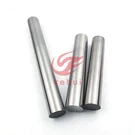
 Zr705 Zirconium Rod
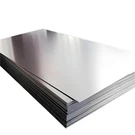
Material: pure zirconium and zirconium alloy. Standard: GB/T 8769, ASTM B550. Grade available: R60702, R60705. Surface: polished. Shape: Sheet, plate, target, foil, rod
Add to Inquiry Zr702 Zirconium Rod
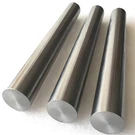
Surface:Pickled、Bright、Polished、Satin. Shape:Round Bar. Standard:ASTM B550. Grade:Zr702 Zr705. Specification:as your requirement
Add to Inquiry High Purity Zirconium Rod
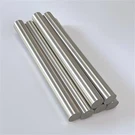
1、excellent corrosion resistance. 2、high strength and stiffness. 3、good electrical conductivity. 4、good heat resistance. 5、low thermal neutron absorption
Add to Inquiry Zirconium Alloy Bar
Corrosion resistance: For chemical and nuclear industries. High-temperature resistance: Use in high-temperature applications like jet engines. Excellent mechanical properties: High strength,
Add to Inquiry Zr705 Zirconium Bar
roduct name: Zr705 zirconium rod. Material: Zirconium and zirconium alloy material. Product specification: Customizable. Product origin: Baoji City, Shaanxi Province, China. Zirconium content: ≥99.5.
Add to Inquiry Zr702 Zirconium Bar
Length: The length of Zr702 zirconium rods can be customized according to customers' requirements. The standard length is 1000mm, but longer lengths of up to 6000mm are also available.. Tolerance:
Add to Inquiry
What is Zirconium Bar?
Renowned for their remarkable corrosion resistance, zirconium bars remain unaffected by acids, alkalis, and even highly corrosive environments, making them ideal for applications in chemical processing, nuclear reactors, and marine equipment.

Zirconium bar is a metal with physical and chemical properties similar to those of titanium. It is strong, ductile and malleable. It effectively combats corrosion and heat. It is insoluble in acids and alkalis. Zirconium oxide is the most usable form of Zirconium.
Application of Zirconium Bar
Nuclear industry
Zirconium Bars are extensively used in nuclear reactors as cladding materials for fuel rods due to their low neutron absorption cross-section. They ensure the integrity of the fuel rods, providing reliable containment for nuclear fuel and preventing radioactive material release.
Chemical processing
Zirconium Bars exhibit outstanding corrosion resistance, making them ideal for use in corrosive chemical environments. They are utilized in chemical processing equipment, such as reactors, vessels, and pipelines, where resistance to acids, alkalis, and other corrosive substances is crucial.
Aerospace and defense
Zirconium Bars are employed in aerospace and defense applications for their high strength-to-weight ratio and resistance to extreme temperatures. They are used in components like aircraft engines, missile casings, and structural parts where durability and performance under demanding conditions are paramount.
Medical devices
Zirconium Bars are utilized in medical implants and devices due to their biocompatibility and resistance to corrosion in bodily fluids. They are used in dental implants, prosthetic limbs, and other surgical instruments where long-term reliability and compatibility with the human body are essential.
Marine equipment
Zirconium Bars are favored for marine applications due to their resistance to corrosion in seawater environments. They are used in shipbuilding, offshore platforms, and desalination plants where exposure to saltwater and harsh marine conditions can cause rapid corrosion in conventional materials.
Electronics
Zirconium Bars are employed in certain electronic components and devices due to their excellent electrical conductivity and thermal properties. They are used in applications such as electrodes, sensors, and heating elements where efficient electrical and thermal conductivity is required.
Zirconium bars are made from pure zirconium, the ores of which are by-products of titanium and tin mining in many parts of the world. Once extracted from the earth, the ore is purified by reduction, resulting in a quantity of pure zirconium metal, which can then be cast or sintered into bars of the pure metal.

Process of Zirconium Bar
|
Zirconium and Zirconium Alloys Rod Bar Processing Technology |
||
|
Serial Number |
Technology |
Process Description |
|
1 |
Ingot casting inspection |
Composition reinspection, appearance inspection |
|
2 |
β annealing |
Heated in furnace under temperature of 1030-1050˚C, insulated for 45 to 60 min,water quenching |
|
3 |
Extrusion or hot forging |
150t or 600t extruding machine, heat temperature 700˚C, 30-45min |
|
4 |
Cold rolling or cold rotary forging or drawing and intermediate annealing |
Intermediate annealing temperature 700˚C/1h |
|
5 |
Final annealing |
Recrystallization annealing temperature 540+/-5˚C, insulated 2h or 600+/-5˚C, insulated 1h, stress relief annealing 460+/-5˚C, insulated 2h |
|
6 |
Straightening |
On roller leveler |
|
7 |
Inspection |
|
|
8 |
Packing |
|

●Visual inspection, check the surface quality, ensuring products are without a single flaw
●Ultrasonic flaw detection, making sure zirconium rods have no defects inside
●Chemical composition detection
●Mechanical features testing
Zirconium has a melting point of 1,855 degrees Celsius (3,371 degrees Fahrenheit). At this temperature, it becomes a liquid metal.

What Is the Boiling Point of Zirconium?
Zirconium has a boiling point of 4,409 degrees Fahrenheit (7,968 degrees Celsius). This high boiling point is due to the strong bond between the zirconium atoms in the metal. When heated, these bonds break and the atoms become more excited and move faster. However, they are still held together by the strong force of attraction between them. At the boiling point, all of the zirconium atoms have enough energy to overcome this force and escape from the metal lattice.
The most common process used for zirconium welding is GTAW. Manual GTAW allows all-position welding of any configuration the torch can access. Automated GTAW usually is limited to flat or horizontal positions. Seam welding machines with copper backup bars and continuous hold-down using copper bars are common for straight joints. Tube-to-tubesheet and small pipe butt welds using automaticorbital GTAW equipment also are very common.
PAW often is used for single-pass welds up to about 3/8 in. (9 mm) thick using automated equipment, copper backing bars, and square butt weld preparations. Typically, a GTAW cover pass is used to correct underfill, and the root side may require a cosmetic fusion pass or mechanical removal of excessive drop-through.
A high-current process, such as keyhole GTAW, should be considered for repetitive welding of heavy sections. Electron beam and laser welding also are suitable.
Shielding
Zirconium requires inert gas protection (using argon, helium, or mixtures only) of the molten weld to prevent oxygen, nitrogen, and moisture from normal atmospheres from contaminating the weld metal. Zirconium also requires inert gas protection of the solidified weld and adjacent metal surfaces heated during welding to prevent surface oxidation and related degradation.
Primary (torch) and secondary (trailing) shielding. Primary shielding must protect the weld metal until it solidifies. Air contact with the molten weld pool will contaminate the entire volume of molten metal and result in contamination of the weld bead. This is why a large ceramic gas cup and a gas lens are among the most important elements of successful zirconium welding.Avoid excessive gas flow rates, because they can cause turbulence and will waste argon.
Torch shielding is sufficient for applications in which the heat input is low and the torch gas itself can blanket the front and back of the tack, such as short tack welds. Multipass tacks and long or heavy tacks, however, always require backup shielding.
Secondary shielding blankets the solidified weld and adjacent hot metal with inert gas until the surface temperature reaches 600 to 800 degrees F.
Backup shielding. Backup shielding protects the molten root of the weld on the first pass and blankets the solidified weld during subsequent passes until the root surface temperature stays below 600 degrees F. Backup shielding also should be used on the back surface of sheet or plate less than 1/4 in. thick to prevent oxidation.
Gas requirements. Welding-grade argon (99.998 percent purity) usually is chosen for primary, secondary, and backup shielding, as well as for purging. Argon provides excellent arc stability, and because it is heavier than air, it blankets the weld and provides protection.
Helium or argon/helium mixtures sometimes are used for torch shielding if added penetration is desired. Argon and helium mixtures also are occasionally employed for backup shielding and purging, in which helium's low density can effectively purge blind spaces.
Gas purity. Argon usually is purchased to 99.998 percent purity with a guarantee of less than 5 parts per million (PPM) oxygen, moisture, or total hydrocarbons. The dew point at the gas supply should not be more than -60 degrees F (-51 degrees C).
Flowmeters and timers. Each gas flow, including purge flows, must be supplied through a separate flowmeter. On/off valves or prepurge and postpurge timers can reduce gas consumption by automatically shutting off or reducing gas flow between welding cycles. Interlocking gas flows with welding current is desirable so welding cannot be started until all shielding gas has purgedthe torch lines.
Gas hoses. Use clean, clear plastic gas hoses (PVC, vinyl, Teflon®, polypropylene, or high-density polyethylene) to eliminate the air permeability that occurs with rubber. Gas connections must be tight, but barbed connectors without clamps often are adequate. Keep hoses off the floor as much as possible to keep them clean and otherwise protected and to minimize the risk ofpunctures or leaks.
Trailing and backup shielding devices. Shields are designed to prevent velocities at the gas inlet that can entrain air. Using two- or three-stage reduction of gas pressure and flow from the inlet tube, the shields provide a gentle, uniform blanket at the surface.
A shield can be made of copper or stainless steel, soldered or welded to form a light, compact body. It may be attached directly to the welding torch and fits closely around the torch cup, with a flat baffle filling the space between them. The gas inlet is above an internal baffle to eliminate velocities that can entrain air into the device. A packing of coarse stainless or bronze wool, atleast 1 in. thick, provides a gradual reduction of pressure and creates a uniform blanket of gas. The final diffuser can be porous (sintered) bronze, stainless steel, or even a copper plate with a uniform grid of small perforated or drilled holes or both.
A typical shield uses about 7 to 10 cubic feet per hour (CFH) per square inch of surface, so the 1-1/2- by 3-in. shield in Figure 6 would be expected to use 30 to 40 CFH. As with the welding torch, excessive flow rates can cause turbulence or air entrainment. To check a shield's performance, hold it 1/4 to 1/2 in. above a zirconium surface, and then heat the surface from the opposite side andcool it with the shield in position.
High-current applications, particularly with automatic equipment, may require a shield that is 3 to 4 in. wide and 12 or more in. long. While the use of skirts (typically high-temperature tape) around the shield is common, they may not be necessary with a properly designed shield.
Manually positioned backup shielding devices follow the same design principles as trailing shields. They are often contoured to match inside diameters or surfaces.
Copper backup bars typically are used in seam welding machines and some production applications. A typical backup bar is 1 to 2 in. wide and has a gas groove of 1/8 to 3/8 in. wide and deep under the weld groove. A wider groove usually is used for heavier material.
A sealed gas distribution channel inside the bar and along its full length is used to provide uniform pressure and gas distribution along the length. The distribution channel is connected to the gas groove with a series of small orifice holes 4 to 6 in. apart along the full length. The material to be welded must be clamped tightly to the gas groove, preferably with a full-length hold-down.
It is common practice to use tape to seal the weld temporarily while initial purge is established, but usually you can remove the tape a longer distance ahead of the torch because the full-length gas distribution eliminates the problems encountered when a space is purged from just the weld start end.
Maintain a continuous argon flow to sweep away any material released from the zirconium surface by the welding heat and to ensure a constant, slight positive pressure. Argon is a poor heat conductor, so welded parts can become quite hot and may discolor slightly as the zirconium adsorbs minor oxygen remaining in the argon atmosphere.
Our Factory
Baoji Kehui Titanium Industry Co., Ltd. is a high-tech enterprise focusing on R&D, production and sales of pipes, rods, plates, wires, forgings and various chemical corrosion-resistant equipment of rare and precious metals such as titanium and titanium alloy, zirconium and zirconium alloy, adhering to the collection of scientific research, manufacturing, sales and service as one of the modern new concept.


Our Certificate

As one of the most professional zirconium bar manufacturers and suppliers in China, we're featured by quality products and low price. If you're going to wholesale cheap zirconium bar in stock, welcome to get free sample from our factory. Also, customized service is available.
zirconium carbide price, zinc zirconium, natural zirconium