

Latest Products



Contact Us
- Gaoya industrial park, High-tech Development Zone, Baoji city, Shaanxi province, China.
- +86-917-3381220
Baoji Kehui Titanium Industry Co., Ltd. was established in March 2011, and its subsidiary, Baoji Juxinyuan New Materials Co., Ltd., was established in May 2017. It is ahigh-tech enterprise focusing on R&D, production and sales of pipes, rods, plates, wires, forgings and various chemical corrosion-resistant equipment of rare and precious metals such as titanium and titanium alloy, zirconium and zirconium alloy, adhering to the collection of scientific research, manufacturing, sales and service as one of the modern new concept.
Why Choose Us?
High quality
Our products are manufactured or executed to very high standards, using the finest materials and manufacturing processes.
Competitive Price
We offering a higher-quality product or service at an equivalent price. As a result we have a growing and loyal customer base.
Rich experience
Our company has many years of production work experience. The concept of customer-oriented and win-win cooperation makes the company more mature and stronger.
Advanced equipment
With a complete production process of smelting, forging, heat treatment, machining, surface treat.
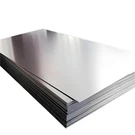
 Zirconium R60705 Plate
Grade:R60705. Specification:T(0.5-50)*W(100-2500)*L(100-6000)mm. Standard:ASTM B551/B551M-12(2017)、ASME SB551/SB551M
Add to Inquiry Zirconium R60702 Plate
Shape:Plate, wire, pipe, bar, discs, target . Condition:Annealed/coldrolled . Grade:R60700 R60702 R60704 R60705 R60706 . Standard:ASTM B551 . Certificates:ISO9001:2015
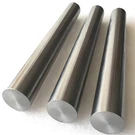
Add to Inquiry Zr705 Zirconium Rod
Material: pure zirconium and zirconium alloy. Standard: GB/T 8769, ASTM B550. Grade available: R60702, R60705. Surface: polished. Shape: Sheet, plate, target, foil, rod
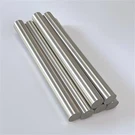
Add to Inquiry Zr702 Zirconium Rod
Surface:Pickled、Bright、Polished、Satin. Shape:Round Bar. Standard:ASTM B550. Grade:Zr702 Zr705. Specification:as your requirement
Add to Inquiry High Purity Zirconium Rod
1、excellent corrosion resistance. 2、high strength and stiffness. 3、good electrical conductivity. 4、good heat resistance. 5、low thermal neutron absorption
Add to Inquiry B551 Zirconium Plate
Exceptional corrosion resistance, high temperature tolerance, and durability. It can withstand extreme temperatures, pressures, used for chemical processing, industrial, and aerospace.
Add to Inquiry High Purity Zirconium Sheet
High purity: Assure maximum performance and consistency. Corrosion resistance: Use in harsh chemicals or extreme environments. High-temperature resistance: Melting point is 1855°C, used in high
Add to Inquiry Zirconium Alloy Bar
Corrosion resistance: For chemical and nuclear industries. High-temperature resistance: Use in high-temperature applications like jet engines. Excellent mechanical properties: High strength,
Add to Inquiry Zirconium Pure Sheet
Material: Zirconium Pure sheet. Purity: 99.6%. Dimensions: Customizable. Density: 6.51g/cm3. Melting point: 1855°C. Boiling point: 4408°c. Place of origin: Baoji, Shaanxi
Add to Inquiry Zirconium Alloy Plate
Product name: Zirconium alloy platePlace of origin: Baoji, China. Shape: Plate. Surface: Polished or customized. Size: 0.5~20mm thick x width x length. Attribution: Non-ferrous metal. Applicable
Add to Inquiry Zr705 Zirconium Bar
roduct name: Zr705 zirconium rod. Material: Zirconium and zirconium alloy material. Product specification: Customizable. Product origin: Baoji City, Shaanxi Province, China. Zirconium content: ≥99.5.
Add to Inquiry Zr702 Zirconium Bar
Length: The length of Zr702 zirconium rods can be customized according to customers' requirements. The standard length is 1000mm, but longer lengths of up to 6000mm are also available.. Tolerance:
Add to Inquiry
What is Zirconium?
Zirconium is a chemical element; it has symbol Zr and atomic number 40. The name zirconium is derived from the name of the mineral zircon, the most important source of zirconium. The word is related to Persian zargun (zircon; zar-gun, "gold-like" or "as gold").[8] It is a lustrous, grey-white, strong transition metal that closely resembles hafnium and, to a lesser extent, titanium.

Zirconium alloys are solid solutions of zirconium or other metals, a common subgroup having the trade mark Zircaloy. Zirconium has very low absorption cross-section of thermal neutrons, high hardness, ductility and corrosion resistance. One of the main uses of zirconium alloys is in nuclear technology, as cladding of fuel rods in nuclear reactors, especially water reactors. A typical composition of nuclear-grade zirconium alloys is more than 95 weight percent zirconium and less than 2% of tin, niobium, iron, chromium, nickel and other metals, which are added to improve mechanical properties and corrosion resistance.
Benefits of Zirconium
Biocompatibility
Because the body won’t reject the zirconium, there will lower chances of infections, complications, pain, discomfort, and allergic reactions to the crowns.
Great at hiding tooth damage
Zirconium is preferred over porcelain in covering up and hiding tooth damage caused by staining or fractures.
Durability
Being made of crystal, zirconium is nearly indestructible, easily withstanding the most vigorous chewing and biting activities. In fact, zirconium is five times as strong as porcelain! Zirconium crowns are milled in a way that they are nearly indestructible. They are also resistant to extreme hot and cold temperatures, which lowers the frequency of tooth hypersensitivity that can be common with other types of crowns.
Long-lasting
Going along with its durability, zirconium crowns also last longer than porcelain crowns. This is, mainly due to zirconium being more resistant to chipping and cracking.
Benefits of Zirconium Alloy
High melting point
Zirconium alloy has a high melting point, which can be used for processing and application in high temperature environment.
Corrosion resistance
Zirconium alloys have excellent corrosion resistance and can be used for a long time in harsh environments such as strong acid, strong alkali, high temperature and high pressure, so they are widely used in the fields of chemical industry, marine and nuclear industry.
Good biocompatibility
Zirconium alloy will not cause rejection when it comes into contact with biological tissues, and can be used in the manufacture of medical devices and artificial joints and other medical materials, with good biocompatibility.
Good mechanical properties
Zirconium alloy has excellent mechanical properties, including high strength, high hardness, high toughness and high wear resistance, etc., which can be used to manufacture high-quality mechanical parts and tools.
Types of Zirconium Alloy
Zirconium-copper alloys (Zr-Cu):
Zirconium-copper alloys combine the corrosion resistance of zirconium with the conductivity of copper. This amalgamation creates materials suitable for electrical applications, such as electrical connectors and conductive components in electronics.
Zirconium-nickel alloys (Zr-Ni):
Zirconium-nickel alloys exhibit enhanced strength and corrosion resistance. So, they are vital in marine applications, especially for components exposed to seawater. Their ability to withstand harsh, corrosive environments positions them prominently in shipbuilding and offshore structures.
Zirconium-titanium alloys (Zr-Ti):
Zirconium-titanium alloys boast excellent mechanical properties and high-temperature resistance. They find applications in aerospace engineering, particularly in aircraft components and structural materials, owing to their strength-to-weight ratio and thermal stability.
Zirconium-tin alloys (Zr-Sn):
Zirconium-tin alloys are known for their exceptional corrosion resistance in acidic and chloride-rich environments. They are extensively utilized in chemical processing industries, such as in the manufacture of heat exchangers and reactors handling corrosive substances.
Zirconium-aluminum alloys (Zr-Al):
Zirconium-aluminum alloys combine the strength of zirconium with the lightweight properties of aluminum. These alloys find use in the automotive and aerospace sectors, contributing to lightweight structural components that require high strength and corrosion resistance.
Zirconium-niobium alloys (Zr-Nb):
Zirconium-niobium alloys are also known as Zircaloy. They possess exceptional resistance to corrosion and neutron absorption. These alloys are fundamental in nuclear reactor components, including fuel cladding due to their stability in high-radiation environments.
Hydrogen storage material
Zirconium has strong hydrogen absorption performance, its largest hydrogen uptake amounts to ZrH1.93 as a hydrogen storage material. Zirconium compounds with special excellent properties, such as resistance to high temperature, oxidation, corrosion, and abrasion. It also has piezoelectricity and outstanding nuclear performance, all of which make it a wide range of applications as the structured and functional ceramic material in many industrial sectors, especially in high-tech industries.
Electrical and electronic industry
Zirconium is used as a getter, grid, and capacitor in the electrical and electronic industry. It can make dynamite, deflagration agents, fuze, and thermal battery emission materials in weapons. Zirconium powder is also used on new missiles. With its high melting point and emission ability, zirconium was also used as a plasma-cutting electrode.
Alloy additive
Zirconium alloy additive can improve the alloy performance in the metallurgical industry. Metal zirconium has strong adsorption to O2, N2, and S, zirconium with N2 can improve the aging strengthening performance of steel; the dehydrogenation of zirconium can slow down the steel grit. For the reasons given above, zirconium is often made into master zirconium alloys such as zirconium iron, aluminum zirconium alloys, aluminum zirconium iron, vanadium iron, and so on as the deoxidizing agent and additive, which mainly used in low alloy steel, steel armor, weapons steel, stainless steel, and high-temperature steel. As the modifier of grey cast iron, zirconium alloy can neutralize the effect of sulfur to improve the mechanical properties of high sulfur and low manganese cast iron.
Zirconium is also an important alloy element or additive of nonferrous metal, such as copper alloy, aluminum alloy, titanium alloy, magnesium alloy, and nickel-based superalloys. Magnesium-zirconium alloy, as the master alloy, can make the alloy crystallization fine and high-temperature increase, so as to use for aircraft engine components.
Biomedical materials
Zirconium has good compatibility with muscle, bone, and brain tissue, which can be used to make all sorts of medical apparatus for surgery and other biomedical materials. Zirconium and zirconium alloy are also used to make all kinds of jewelry and high-grade decoration.
Application of Zirconium Alloy
Nuclear sector
In the realm of nuclear energy, these alloys play a critical role. Their remarkable resistance to corrosion and neutron absorption renders them indispensable in nuclear reactors, particularly for fuel cladding and structural components. This pivotal function ensures the safety and efficiency of nuclear power generation.
Chemical processing
Beyond the nuclear sector, zirconium alloys find extensive utilization in chemical processing. Their innate resistance to aggressive chemicals makes them a go-to choice for equipment and machinery in chemical plants, safeguarding against corrosion and ensuring the integrity of processing systems.

Aerospace and aviation
In the aerospace and aviation domains, these alloys contribute significantly to the development of lightweight, high-strength components. From aircraft engines to structural materials, zirconium alloys aid in enhancing performance while maintaining durability, crucial for the stringent demands of aviation.
Marine uses
Furthermore, in marine engineering, zirconium alloys act as shields against corrosion in harsh marine environments. Their robustness and resilience make them invaluable in shipbuilding and the construction of offshore structures
Process of Zirconium
Extraction and Refining
Extracting zircon
The sand and gravel that contain zircon mixed with silicate, ilmenite, and rutile are typically collected from coastal waters by a floating dredge, a large steam shovel fitted on a floating barge. After the shovel has scooped up the gravel and sand, they are purified by means of spiral concentrators, which separate on the basis of density. The ilmenite and rutile are then removed by magnetic and electrostatic separators. The purest concentrates of zircon are shipped to end-product manufacturers to be used in metal production, while less pure concentrations are used for refractories.
Refining zircon
End-product manufacturers of zircon further refine the nearly pure zircon into zirconium by using a reducing agent (usually chlorine) to purify the metal and then sintering (heating) it until it becomes sufficiently ductile—workable—for industrial use. For small-scale laboratory use, zirconium metal may be produced by means of a chemical reaction in which chloride is used to reduce the zircon.
The less-pure zircon is made into zirconia, an oxide of zirconium, by fusing the zircon with coke, iron borings, and lime until the silica is reduced to silicon that alloys with the iron. The zirconia is then stabilized by heating it to about 3,095 degrees Fahrenheit (1,700 degrees Celsius), with additions of lime and magnesia totalling about five percent.
Refining baddeleyite
As mentioned above, baddeleyite contains relatively high, pure concentrations of zirconium oxide that can be used without filtering or cleansing. The only refining process used on baddeleyite involves grinding the gravel or sand to a powder and sizing the powder with different sized sieves. All zirconium oxide that comes from baddeleyite is used for refractories and, increasingly, advanced ceramics.
Grease, oil, and lubricants employed in machining, forming, and fabricating operations on zirconium and zirconium alloys should be removed by employing one of the methods or a combination of methods: alkaline or emulsion soak-type cleaners, ultrasonic cleaning, acetone, citrus based cleaners, or safety solvent immersion washing or vapor degreasing, or electrolytic alkaline cleaning system. Mechanical de-scaling methods such as sandblasting, shot blasting, and vapor blasting may be used to remove hot work scales and lubricants from zirconium surfaces if followed by thorough conditioning and cleaning. Aluminum oxide, silicon carbide, silica sand, zircon sand, and steel grit are acceptable media for mechanical de-scaling. Recommended post treatment of shot or abrasive blasted zirconium surfaces may include acid pickling to ensure complete removal of metallic iron, oxide, scale, and other surface contaminants. Visual inspection of material cleaned in accordance with this practice should show no evidence of paint, oil, grease, glass, graphite, lubricant, scale, abrasive, iron, or other forms of contamination.


The minerals which contain zirconium, including zircon, jargoon, hyacinth and ligure, among others, were known in prehistory and are mentioned in biblical writings, but these minerals were not known to contain a new element until 1789, when the chemist Martin Heinrich Klaproth inspected a Sri Lankan jargoon and discovered a new metal which he named “zirkonerde”.
However, it was many more years before Jons Jakob Berzelius was able to isolate the metal in an impure form, marking the world’s first glimpse of elemental zirconium metal.
Chemical Properties of Zirconium
|
Group |
4 |
Melting point |
1854°C, 3369°F, 2127 K |
|
Period |
5 |
Boiling point |
4406°C, 7963°F, 4679 K |
|
Block |
d |
Density (g cm−3) |
6.52 |
|
Atomic number |
40 |
Relative atomic mass |
91.224 |
|
State at 20°C |
Solid |
Key isotopes |
90Zr, 92Zr, 94Zr |
|
Electron configuration |
[Kr]4d2 5s2 |
CAS number |
7440-67-7 |
|
ChemSpider ID |
22431 |
ChemSpider is a free chemical structure database |
|
Physical Properties
Zirconium is a silvery shiny heavy metal (density 6,501 g / cm3 at 25 ° C), it externally resembles steel. The metal crystallizes in two different modifications in which it can be converted by temperature change. Below 870 ° C crystallizes α-zirconium in the hexagonal crystal system (hexagonal-dense sphere packing, magnesium type) in the space group 6/ mmm with the grid parameters a = 323 pm and c = 514 pm as well as two formula units per unit cell. At 870 ° C, the crystal structure changes to the cubic-centered β structure (tungsten type) with the space group bar in \ {} m 3 and the lattice parameter a = 361 pm.
Zirconium is relatively soft and flexible. It can be easily processed by rolling, forging and hammering. However, it becomes brittle and difficult to process due to low levels of hydrogen, carbon or nitrogen contamination in the metal. The electrical conductivity is not as good as that of other metals. It is only about 4% of that of copper. In contrast, zirconium is a good conductor of heat. Melting point and boiling point are slightly higher in comparison with the lighter homologue titanium (melting point: titanium: 1667 ° C, zirconium: 1857 ° C). Also, the electrical and thermal conductivity are better. Below 0,55 K, zirconium becomes superconducting.
The properties of zirconium and the heavier homologue hafnium are very similar due to the lanthanide contraction. This requires similar atomic radii (Zr: 159 pm, Hf: 156 pm) and thus similar properties. The two metals differ considerably in their density (Zr: 6,5 g / cm3, Hf: 13,3 g / cm3).
An important property, because of which zirconium has gained great importance in reactor construction, is its small capture cross-section for neutrons. In this capacity, zirconium is also very different from hafnium. This makes the complex separation process necessary for these applications.
Zircon, Zirconia and Zirconium - What's the Difference?
Zircon
The primary mineral is zircon, which is a co-product from the mining and processing of ancient heavy mineral sand deposits. It’s also referred to as zirconium silicate and has the chemical composition ZrSiO4. Zircon is mined mainly in Australia and can be used either in its coarse sand form or milled to a fine powder, which is referred to as zircon flour. Zircon sand is used in the casting and foundry industries, whilst zircon flour is primarily used as an opacifier in the ceramics industry. Over half of the zircon produced globally is used within the ceramics industry.
Like most rocks and minerals, zircon is a naturally occurring radioactive material (NORM) as small amounts of radionuclei became ‘locked’ in the zircon crystal structure when the earth was formed billions of years ago. Natural radiation from zircon is extremely low and similar to that of other naturally-occurring sources such as granite.
Zircon has several derivatives, created by modifying zircon chemically.
Zirconia and cubic zirconia
Zircon can be processed to create zirconia by melting the sand at very high temperatures, typically above 2,600oC, in an electric arc furnace to form molten zirconia, also known as zirconium oxide (ZrO2). The cooled and crushed zirconia is then used in many different applications including in advanced ceramics and biomedical implants.
There is, of course, the more widely known cubic zirconia. Often referred to as a synthetic diamond, cubic zirconia has become a popular gemstone due to its optically clear single crystals and its high refractive index. Zirconia also occurs naturally as the mineral baddeleyite.
Zirconium
Zirconium, another derivative of zircon, is the chemical element Zr in the Periodic Table and takes the form of a silvery grey metal. It is typically produced by the reduction of the chemical zirconium oxychloride (ZOC), where the ZOC itself is produced by a complex process of chemical disassociation of zircon (zirconium silicate).
Used mainly as an alloy in the nuclear power industry, zirconium can also be added to aluminium alloys and steel to improve mechanical properties and corrosion resistance. Zirconium chemicals are used in a vast array of applications from catalysts to paper coatings and cosmetics.
Our Factory
Baoji Kehui Titanium Industry Co., Ltd. is a high-tech enterprise focusing on R&D, production and sales of pipes, rods, plates, wires, forgings and various chemical corrosion-resistant equipment of rare and precious metals such as titanium and titanium alloy, zirconium and zirconium alloy, adhering to the collection of scientific research, manufacturing, sales and service as one of the modern new concept.


Our Certificate

As one of the most professional zirconium and zirconium alloy manufacturers and suppliers in China, we're featured by quality products and low price. If you're going to wholesale cheap zirconium and zirconium alloy in stock, welcome to get free sample from our factory. Also, customized service is available.
