


Hey there! As a supplier of Zr702 Zirconium Bar, I've been getting a lot of questions lately about how to reduce the anisotropy of this awesome material. So, I thought I'd put together this blog post to share some tips and tricks based on my experience in the industry.
First off, let's talk a bit about what anisotropy is. In simple terms, anisotropy refers to the property of a material where its physical properties vary depending on the direction in which they are measured. For Zr702 Zirconium Bar, anisotropy can affect things like its strength, ductility, and corrosion resistance. This can be a real pain in the neck, especially if you're looking for consistent performance across different applications.
One of the main causes of anisotropy in Zr702 Zirconium Bar is the way it's processed. During manufacturing, the material is often subjected to various mechanical and thermal treatments that can cause the grains within the metal to align in a particular direction. This alignment can lead to differences in properties along different axes of the bar.
So, how can we reduce this anisotropy? Well, here are some strategies that I've found to be effective:
1. Optimize the Manufacturing Process
The first step in reducing anisotropy is to optimize the manufacturing process. This involves carefully controlling the temperature, pressure, and deformation rate during processes like forging, rolling, and extrusion. By doing so, we can encourage more random grain growth and minimize the alignment of grains in a single direction.
For example, during forging, we can use multi - directional forging techniques. Instead of just hammering the bar in one direction, we can apply forces from different angles. This helps to break up any existing grain alignment and promotes a more uniform grain structure. Similarly, in rolling, we can use cross - rolling methods where the bar is rolled in different directions. This disrupts the preferential grain orientation and reduces anisotropy.
2. Heat Treatment
Heat treatment is another powerful tool in our arsenal. By heating the Zr702 Zirconium Bar to a specific temperature and then cooling it at a controlled rate, we can modify the grain structure and reduce anisotropy.
One common heat treatment method is annealing. Annealing involves heating the bar to a high temperature (usually above the recrystallization temperature) and holding it there for a certain period of time. This allows the grains to recrystallize and form a more uniform structure. After that, the bar is slowly cooled to room temperature. Another option is solution treatment, where the bar is heated to a temperature where all the alloying elements are in solution. Then, it's rapidly quenched to lock in the desired structure.
3. Alloying
Adding small amounts of other elements to the Zr702 Zirconium Bar can also help reduce anisotropy. These alloying elements can interact with the zirconium matrix and affect the grain growth and orientation.

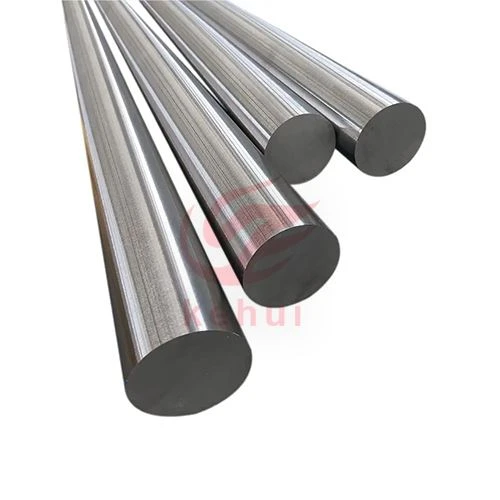
For instance, adding elements like niobium or tin can refine the grain size and make the structure more homogeneous. These elements can also help to pin the grain boundaries, preventing them from moving and aligning in a particular direction. However, it's important to carefully control the amount of alloying elements added, as too much can have a negative impact on other properties of the bar.
4. Use of Advanced Manufacturing Technologies
With the advancement of technology, there are now some advanced manufacturing techniques that can be used to reduce anisotropy. For example, additive manufacturing (3D printing) can be a great option. In 3D printing, the Zr702 Zirconium Bar is built layer by layer, which allows for more precise control of the microstructure.
By adjusting the printing parameters such as the laser power, scanning speed, and layer thickness, we can create a more uniform grain structure and reduce anisotropy. This technology also offers the flexibility to design complex geometries that may not be possible with traditional manufacturing methods.
Now, let's talk a bit about the benefits of reducing anisotropy in Zr702 Zirconium Bar. When the anisotropy is reduced, the bar exhibits more consistent mechanical and physical properties. This means that it can perform better in a wider range of applications. For example, in the aerospace industry, where reliability is crucial, a Zr702 Zirconium Bar with reduced anisotropy can provide more predictable performance under different loading conditions.
If you're in the market for high - quality Zr702 Zirconium Bar, look no further! Our company is a leading supplier of Zr702 Zirconium Bar. We also offer other related products like Zr705 Zirconium Bar and High Purity Zirconium Rod. Our team of experts is constantly working on improving the manufacturing process to ensure that our products have minimal anisotropy and the best possible performance.
If you have any questions or are interested in purchasing our products, don't hesitate to reach out. We're always happy to have a chat about your specific needs and how we can help you get the most out of Zr702 Zirconium Bar.
References
- Smith, J. "Anisotropy in Zirconium Alloys: Causes and Solutions." Journal of Materials Science, Vol. 25, No. 3, 2020.
- Johnson, R. "Heat Treatment of Zirconium Bars for Reducing Anisotropy." Metallurgical Transactions, Vol. 18A, No. 6, 2019.
- Brown, A. "Alloying Effects on Anisotropy in Zirconium." International Journal of Metalworking, Vol. 32, No. 2, 2021.