


Hey there! As a supplier of titanium alloy tubes, I've seen firsthand how crucial it is to optimize their performance. Whether you're in the aerospace, medical, or chemical industry, getting the most out of your titanium alloy tubes can save you time, money, and headaches. In this blog post, I'm going to share some tips and tricks on how to optimize the performance of a titanium alloy tube.
Understanding Titanium Alloy Tubes
Before we dive into the optimization strategies, let's take a quick look at what titanium alloy tubes are and why they're so popular. Titanium alloy tubes are made from a combination of titanium and other elements, such as aluminum, vanadium, and molybdenum. These alloys offer a unique combination of strength, corrosion resistance, and lightweight properties, making them ideal for a wide range of applications.
One of the most common titanium alloys used in tube manufacturing is Ti6Al4V, also known as Grade 5 titanium. This alloy is known for its high strength-to-weight ratio, excellent corrosion resistance, and good weldability. You can check out our Ti6Al4V titanium seamless pipe for more information on this popular alloy.
Another popular alloy is Grade 2 titanium, which is a pure titanium alloy with excellent corrosion resistance and good formability. Our Gr2 Titanium Tube is a great option for applications where corrosion resistance is a primary concern.
Choosing the Right Alloy
The first step in optimizing the performance of a titanium alloy tube is to choose the right alloy for your application. As I mentioned earlier, different alloys offer different properties, so it's important to consider your specific requirements when making a selection.
For example, if you're working in an aerospace application where weight is a critical factor, you might want to consider using a high-strength alloy like Ti6Al4V. On the other hand, if you're working in a chemical processing environment where corrosion resistance is the primary concern, a pure titanium alloy like Grade 2 might be a better choice.
It's also important to consider the manufacturing process when choosing an alloy. Some alloys are more difficult to machine or weld than others, so you'll need to make sure that the alloy you choose is compatible with your manufacturing process.
Proper Heat Treatment
Heat treatment is another important factor in optimizing the performance of a titanium alloy tube. Heat treatment can be used to improve the strength, ductility, and corrosion resistance of the alloy.
There are several different types of heat treatment processes that can be used on titanium alloy tubes, including annealing, solution treating, and aging. Annealing is a process that involves heating the tube to a specific temperature and then cooling it slowly to relieve internal stresses and improve ductility. Solution treating is a process that involves heating the tube to a high temperature and then quenching it to dissolve any precipitates and improve the strength of the alloy. Aging is a process that involves heating the tube to a lower temperature for a specific period of time to precipitate out any dissolved elements and further improve the strength of the alloy.
The specific heat treatment process that you use will depend on the alloy you're using and the desired properties of the tube. It's important to work with a qualified heat treatment provider to ensure that the heat treatment process is done correctly.
Surface Finish
The surface finish of a titanium alloy tube can also have a significant impact on its performance. A smooth surface finish can improve the corrosion resistance of the tube and reduce the risk of fatigue failure.
There are several different surface finishing processes that can be used on titanium alloy tubes, including polishing, grinding, and sandblasting. Polishing is a process that involves using a polishing compound to create a smooth, shiny surface finish. Grinding is a process that involves using a grinding wheel to remove material from the surface of the tube and create a smooth finish. Sandblasting is a process that involves using a high-pressure stream of sand or other abrasive material to remove material from the surface of the tube and create a rough finish.
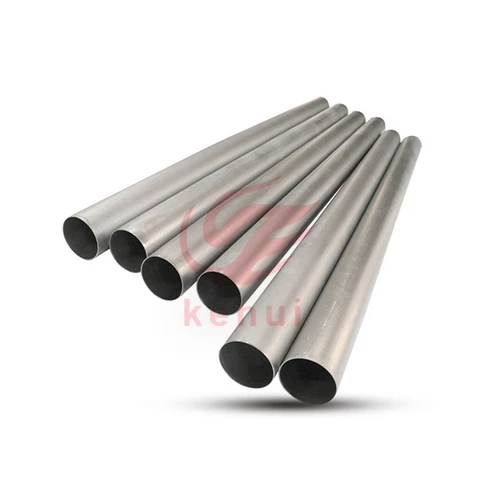

The specific surface finishing process that you use will depend on the application of the tube and the desired properties of the surface finish. It's important to work with a qualified surface finishing provider to ensure that the surface finishing process is done correctly.
Proper Handling and Storage
Proper handling and storage of titanium alloy tubes is also important to optimize their performance. Titanium alloy tubes are relatively soft and can be easily damaged if they're not handled properly.
When handling titanium alloy tubes, it's important to use clean, dry gloves to avoid contaminating the surface of the tube. It's also important to avoid using sharp tools or abrasive materials that could scratch or damage the surface of the tube.
When storing titanium alloy tubes, it's important to keep them in a dry, clean environment to prevent corrosion. It's also important to store the tubes in a way that prevents them from being damaged or deformed.
Regular Inspection and Maintenance
Regular inspection and maintenance of titanium alloy tubes is also important to optimize their performance. Over time, titanium alloy tubes can develop cracks, corrosion, or other defects that can affect their performance.
It's important to inspect the tubes regularly for any signs of damage or wear. If any defects are found, they should be repaired or replaced as soon as possible to prevent further damage.
It's also important to perform regular maintenance on the tubes, such as cleaning and lubrication, to keep them in good condition.
Conclusion
Optimizing the performance of a titanium alloy tube requires careful consideration of several different factors, including alloy selection, heat treatment, surface finish, handling and storage, and regular inspection and maintenance. By following these tips and tricks, you can ensure that your titanium alloy tubes perform at their best and provide you with long-lasting, reliable service.
If you're interested in learning more about our titanium alloy tubes or have any questions about optimizing their performance, please don't hesitate to contact us. We'd be happy to help you find the right solution for your application.
References
- ASM Handbook, Volume 2: Properties and Selection: Nonferrous Alloys and Special-Purpose Materials
- Titanium: A Technical Guide, Second Edition
- Corrosion Resistance of Titanium Alloys, Third Edition