


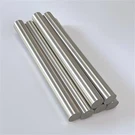


As a supplier of the best titanium bars, I often get asked whether titanium bars are lightweight. This question is crucial for many industries, including aerospace, automotive, and medical, where weight is a significant factor in design and performance. In this blog post, I'll delve into the topic of the lightweight nature of titanium bars, exploring the science behind it and how it impacts various applications.
Understanding Titanium's Density
To answer the question of whether the best titanium bar is lightweight, we first need to understand the concept of density. Density is defined as the mass per unit volume of a substance. In simple terms, it tells us how much "stuff" is packed into a given space. A material with a low density is considered lightweight because it has less mass for the same volume compared to a material with a high density.
Titanium has a density of approximately 4.5 grams per cubic centimeter (g/cm³). To put this into perspective, let's compare it with some other common metals. Steel, which is widely used in construction and manufacturing, has a density ranging from 7.75 to 8.05 g/cm³. Aluminum, another lightweight metal, has a density of about 2.7 g/cm³. From these figures, we can see that titanium is lighter than steel but heavier than aluminum.
However, the story doesn't end there. When evaluating the lightweight nature of a material, we also need to consider its strength. Titanium is renowned for its high strength - to - weight ratio. This means that for a given strength requirement, a titanium bar can be made lighter than a steel bar. For example, in aerospace applications, where reducing weight is critical to improve fuel efficiency and performance, titanium is often preferred over steel despite its slightly higher density.
Factors Affecting the Weight of Titanium Bars
The weight of a titanium bar is not solely determined by the density of titanium itself. Several other factors come into play:
Alloy Composition
Titanium is rarely used in its pure form. Instead, it is often alloyed with other elements such as aluminum, vanadium, and iron to enhance its properties. Different alloy compositions can have different densities. For instance, the Ti1023 Titanium Alloy Bar has a unique alloy composition that may affect its weight compared to other titanium alloys. The addition of certain elements can increase or decrease the density of the alloy, depending on the nature and proportion of the added elements.


Bar Dimensions
The size and shape of the titanium bar also significantly impact its weight. A longer and thicker bar will naturally weigh more than a shorter and thinner one. When designing with titanium bars, engineers carefully consider the dimensions to achieve the desired balance between weight and strength. For example, in the automotive industry, titanium bars used in engine components are precisely sized to reduce weight without sacrificing performance.
Manufacturing Process
The manufacturing process can also influence the weight of the titanium bar. Processes such as forging, rolling, and machining can introduce internal stresses and change the microstructure of the titanium, which may have a minor effect on its density. Additionally, the surface finish of the bar can add or remove a small amount of material, affecting the overall weight.
Applications Where Lightweight Titanium Bars Shine
Aerospace Industry
The aerospace industry is one of the biggest consumers of lightweight titanium bars. In aircraft construction, every gram of weight reduction can lead to significant fuel savings and improved flight performance. Titanium bars are used in critical components such as landing gear, engine parts, and structural frames. The high strength - to - weight ratio of titanium allows for the design of lighter and more efficient aircraft. For example, the use of Ti - 38644 Titanium Alloy Bars Rods 3Al - 8V - 6Cr - 4Mo - 4Zr UNS R58640 in aerospace applications provides the necessary strength while keeping the weight to a minimum.
Medical Industry
In the medical field, lightweight titanium bars are used in orthopedic implants and dental fixtures. Titanium is biocompatible, which means it can be safely used inside the human body without causing adverse reactions. The lightweight nature of titanium bars is beneficial for patients, as it reduces the stress on the surrounding tissues and allows for more comfortable movement. For example, Ti6Al4V Titanium Alloy Cylindrical Head Hexagon Socket Screws are commonly used in orthopedic surgeries due to their combination of strength and low weight.
Sports Equipment
Titanium bars are also finding their way into sports equipment. In cycling, titanium frames are prized for their lightweight and durability. The reduced weight of the frame allows cyclists to accelerate faster and climb hills more easily. Similarly, in golf clubs, titanium bars are used in the heads to increase the club's power while keeping the overall weight of the club manageable.
Conclusion
In conclusion, while titanium is not the lightest metal, the best titanium bars can be considered lightweight when taking into account their high strength - to - weight ratio. The density of titanium, combined with its excellent mechanical properties, makes it an ideal choice for applications where weight reduction is crucial. Whether it's in aerospace, medical, or sports equipment, titanium bars offer a balance of strength and lightness that few other materials can match.
If you're in need of high - quality titanium bars for your specific application, I encourage you to reach out to us. We are committed to providing the best titanium bars that meet your requirements in terms of weight, strength, and quality. Contact us today to start a procurement discussion and find the perfect titanium bar solution for your project.
References
- Callister, W. D., & Rethwisch, D. G. (2017). Materials Science and Engineering: An Introduction. Wiley.
- ASM Handbook Committee. (2000). ASM Handbook Volume 2: Properties and Selection: Nonferrous Alloys and Special - Purpose Materials. ASM International.