


Hey there! As a supplier of Gr6 Titanium Bars, I often get asked about the differences between Gr6 and other grades of titanium in bar form. So, I thought I'd take a few minutes to break it down for you.
What is Titanium?
First off, let's talk a bit about titanium itself. Titanium is an amazing metal. It's super strong, lightweight, and has excellent corrosion resistance. These properties make it a go - to material in a whole bunch of industries, like aerospace, medical, and marine.
Gr6 Titanium Bars: An Overview
Gr6 titanium, also known as Ti - 3Al - 2.5V, is an alpha - beta titanium alloy. The addition of aluminum and vanadium gives it some unique properties. It's got a great combination of strength and ductility. This means it can be shaped and formed relatively easily while still maintaining its strength.
One of the key applications of Gr6 titanium bars is in the aerospace industry. They're used in aircraft structures, especially in areas where weight savings are crucial but you still need a good amount of strength. For example, they can be used in the construction of landing gear components or wing structures.
Comparing Gr6 with Other Grades
Gr2 Titanium Bar
Let's start by looking at GR2 Titanium Bar. Gr2 is a commercially pure titanium grade. Unlike Gr6, it doesn't have alloying elements like aluminum and vanadium. This makes it more ductile and easier to cold - work.
In terms of strength, Gr2 is not as strong as Gr6. If you're working on a project where you need high strength, Gr2 might not be the best choice. However, if you need a material that's highly formable and has excellent corrosion resistance, Gr2 could be a great option. For instance, it's commonly used in chemical processing equipment and architectural applications.

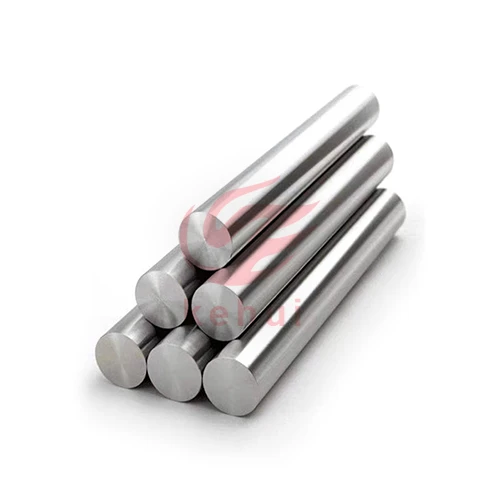
Gr5 High Strength Titanium Alloy Bar
Now, let's move on to Gr5 High Strength Titanium Alloy Bar. Gr5, also known as Ti - 6Al - 4V, is one of the most widely used titanium alloys. It has a higher aluminum and vanadium content compared to Gr6.
The main difference between Gr5 and Gr6 is the strength. Gr5 is significantly stronger than Gr6. It's often used in applications where high strength is a must, such as in the aerospace industry for critical components like turbine blades. However, this high strength comes at a cost. Gr5 is more difficult to machine than Gr6. So, if your project requires a lot of machining operations, Gr6 might be a better option as it's more machinable.
GR23 Titanium Alloy Bar
Next up is GR23 Titanium Alloy Bar. Gr23 is a near - alpha titanium alloy, similar to Gr5 but with a lower oxygen content. This gives it better fracture toughness.
Compared to Gr6, Gr23 has higher strength and better fracture resistance. It's commonly used in medical applications, such as orthopedic implants. If you're in the medical industry and need a material that can withstand high stress and has good biocompatibility, Gr23 would be a great choice. But if your project doesn't require such high - end properties and you're looking for a more cost - effective option, Gr6 could be the way to go.
Chemical Composition
The chemical composition plays a huge role in determining the properties of each grade. Here's a quick comparison of the main elements in Gr6, Gr2, Gr5, and Gr23:
- Gr6 (Ti - 3Al - 2.5V): It contains about 3% aluminum and 2.5% vanadium. The rest is mainly titanium.
- Gr2 (Commercially Pure Titanium): It's mostly pure titanium with small amounts of iron, oxygen, and carbon.
- Gr5 (Ti - 6Al - 4V): It has 6% aluminum and 4% vanadium, which gives it its high strength.
- Gr23 (Ti - 6Al - 4V ELI): Similar to Gr5 but with lower interstitial elements like oxygen, making it more suitable for medical applications.
Mechanical Properties
Strength
As mentioned earlier, the strength varies among these grades. Gr5 and Gr23 are the strongest, followed by Gr6, and then Gr2. Tensile strength is a key measure here. Gr5 can have a tensile strength of up to 140 ksi (thousands of pounds per square inch), while Gr6 typically has a tensile strength in the range of 90 - 110 ksi.
Ductility
Ductility is the ability of a material to deform under tensile stress without breaking. Gr2 is the most ductile of the four grades. It can be easily bent and formed. Gr6 also has good ductility, which allows it to be shaped into various forms. Gr5 and Gr23 are less ductile due to their higher strength.
Corrosion Resistance
All titanium grades have excellent corrosion resistance. However, the commercially pure Gr2 has slightly better corrosion resistance in some environments because it doesn't have alloying elements that could potentially react. But overall, Gr6, Gr5, and Gr23 also offer great protection against corrosion, making them suitable for use in harsh conditions.
Cost Considerations
Cost is always an important factor when choosing a material. Gr2 is generally the least expensive because it's commercially pure and easier to produce. Gr6 is moderately priced. It offers a good balance between performance and cost. Gr5 and Gr23 are more expensive due to their high - end properties and the more complex production processes involved.
Conclusion
So, there you have it! The differences between Gr6 and other grades of titanium in bar form are significant. When choosing the right grade for your project, you need to consider factors like strength, ductility, corrosion resistance, cost, and the specific application.
If you're still not sure which grade is best for you, don't hesitate to reach out. As a supplier of Gr6 Titanium Bars, I have a lot of experience in this field and can help you make the right decision. Whether you're in the aerospace, medical, or any other industry, I can provide you with high - quality Gr6 titanium bars that meet your requirements. Let's have a chat and see how we can work together on your next project.
References
- "Titanium: A Technical Guide" by John R. Davis
- "The Materials Science of Titanium" by Robert I. Jaffee