


Yo, what's up everyone! As a supplier of titanium bars, I've always been super into the story behind how these badboys are made. So, today, I wanna take you on a little journey through the history of titanium bar production.
Early Discovery and Initial Hurdles
It all started way back in 1791, when an English pastor and mineralogist named William Gregor found this new element in a black sand called ilmenite in Cornwall, England. He named the stuff he found "menachanite" after the parish where he found it. Then, in 1795, a German chemist named Martin Heinrich Klaproth found the same element in rutile and named it "titanium," after the Titans of Greek mythology, because of its "strength."
But it wasn't until 1910 that an American chemist named Matthew A. Hunter managed to make the first pure titanium metal. He did this by heating titanium tetrachloride with sodium in a sealed steel cylinder. This method is known as the Hunter process. However, this process was expensive and not great for making large amounts of titanium.
The Kroll Process: A Game - Changer
In the 1930s, a Luxembourgish - American metallurgist named William J. Kroll came up with a new way to make titanium. His process involved reducing titanium tetrachloride with magnesium in an argon atmosphere. This process was much better than the Hunter process and was way more efficient for large - scale production. It became the standard method for making titanium sponge, which is the starting material for making titanium bars.
During World War II, the demand for lightweight and strong materials grew like crazy. The military was looking for something better than aluminum, especially for use in aircraft. Titanium seemed like the perfect answer because it's strong, lightweight, and resistant to corrosion. So, the development of the Kroll process couldn't have come at a better time. The US government started supporting research and development of titanium production techniques, and companies began to invest in facilities to make titanium.
Post - War Boom and Industrial Applications
After the war, the aerospace industry started using titanium more and more. Planes like the Lockheed U - 2 spy plane, which was developed in the 1950s, were made almost entirely of titanium. The use of titanium in the aerospace industry made the planes faster, more fuel - efficient, and able to fly at higher altitudes.
As the aerospace industry grew, so did the demand for titanium bars. Titanium bars are used in a bunch of different aerospace components, like landing gear, engine parts, and structural elements. They're also used in the marine industry because of their excellent corrosion resistance. Ships, submarines, and offshore oil rigs all use titanium bars in various parts of their structures.
Advancements in Titanium Bar Production Techniques
Over the years, there have been a lot of improvements in the way titanium bars are made. One of the big advancements is in the melting process. There are two main ways to melt titanium for bar production: vacuum arc remelting (VAR) and electron beam melting (EBM).
VAR involves melting the titanium sponge or scrap in a water - cooled copper crucible under a vacuum using an electric arc. This process helps remove impurities and ensures a more uniform chemical composition in the titanium. EBM, on the other hand, uses an electron beam to melt the titanium. It's a really precise method that can be used to make bars with very specific properties.
Another important development is in the forging and rolling processes. Forging is when you shape the titanium by applying pressure, usually with a hammer or a press. Rolling is when you pass the titanium through a series of rollers to make it thinner and longer. These processes help improve the mechanical properties of the titanium bars, like their strength and ductility.
Different Types of Titanium Bars We Supply
As a supplier, we offer a wide variety of titanium bars. One of our popular products is the Ti - 62222 αβ Titanium Alloy Bar. This alloy is a high - strength titanium alloy that's great for aerospace applications. It has a good combination of strength, toughness, and corrosion resistance.
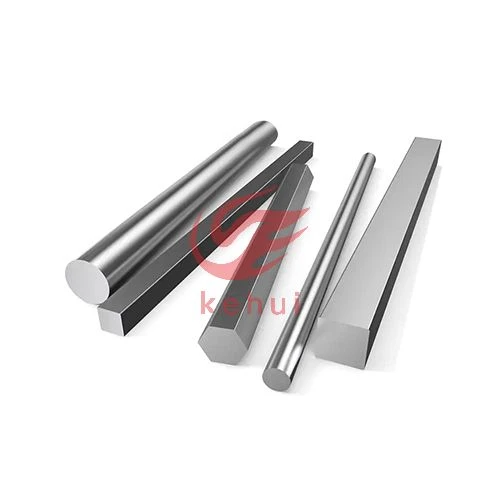

We also have the Ti - 6Al - 2Sn - 4Zr - 6Mo titanium Bar. This alloy is known for its excellent mechanical properties at high temperatures. It's often used in engine components that need to withstand extreme heat and stress.
And then there's the GR1 Titanium Bar. Grade 1 titanium is the softest and most ductile of the commercially pure titanium grades. It's used in applications where corrosion resistance is important, but high strength isn't necessary, like in chemical processing equipment.
Future Outlook and Customer Engagement
The future looks bright for the titanium bar industry. With the growth of industries like aerospace, automotive, and medical, the demand for titanium bars is only going to increase. There's also a lot of research going on to develop new titanium alloys and production techniques that are more efficient and environmentally friendly.
If you're in the market for high - quality titanium bars, whether it's for a small - scale project or a large industrial application, we'd love to talk to you. We've got the experience and the products to meet your needs. Don't hesitate to reach out and start a conversation about your titanium bar requirements. Let's work together to get you the best titanium bars for your project.
References
- Lütjering, G., & Williams, J. C. (2007). Titanium. Springer.
- Boyer, R. R., Welsch, G., & Collings, E. W. (1994). Materials Properties Handbook: Titanium Alloys. ASM International.