



Hey there! As a supplier of Zirconium Plate, I've been getting a lot of questions about the formability of zirconium plate lately. So, I thought I'd write this blog to share some insights on this topic.
First off, let's talk about what formability actually means. In simple terms, formability refers to how easily a material can be shaped or formed into different geometries without cracking, tearing, or experiencing other forms of damage. For zirconium plates, good formability is super important because it allows manufacturers to create a wide range of products, from simple components to complex shapes.
Zirconium is a pretty unique metal. It has some properties that make its formability both interesting and challenging at the same time. One of the key factors affecting the formability of zirconium plate is its crystal structure. Zirconium has a hexagonal close - packed (HCP) crystal structure at room temperature. This structure is different from the face - centered cubic (FCC) or body - centered cubic (BCC) structures of some other common metals. The HCP structure means that zirconium has fewer slip systems available for deformation. Slip systems are the planes and directions along which atoms can move when the metal is being deformed. With fewer slip systems, zirconium can be a bit more difficult to deform compared to metals with more slip systems.
However, don't let that discourage you. There are ways to improve the formability of zirconium plate. One of the most common methods is through heat treatment. By heating the zirconium plate to a specific temperature, we can change its microstructure and make it more ductile. Ductility is a measure of how much a material can be stretched or deformed before it breaks. When we heat the zirconium, the atoms become more mobile, and the metal can be more easily shaped. For example, hot forming zirconium at elevated temperatures can significantly enhance its formability.
Another factor that affects formability is the purity of the zirconium. High - purity zirconium plates, like our Zirconium Pure Sheet, generally have better formability compared to those with a lot of impurities. Impurities can act as obstacles to the movement of atoms during deformation, reducing the material's ability to be formed. So, if you're looking for good formability, choosing a high - purity zirconium plate is a smart move.
The thickness of the zirconium plate also plays a role. Thinner plates are usually more formable than thicker ones. This is because the stress required to deform a thinner plate is lower, and it's easier to achieve the desired shape without causing damage. But of course, the choice of thickness depends on the specific application. Sometimes, a thicker plate is necessary to meet the strength and durability requirements of the final product.
Let's take a look at some of our specific zirconium plate products and their formability. Our Zirconium R60702 Plate is an alloy that has good formability characteristics. The alloying elements in R60702 are carefully selected to enhance its mechanical properties, including formability. This plate can be used in a variety of applications where complex shapes are required, such as in the aerospace and chemical industries.
Our B551 Zirconium Plate also offers decent formability. It meets the ASTM B551 standard, which means it has been tested and verified to have certain quality and performance characteristics. This plate is suitable for applications where formability and corrosion resistance are both important, like in the construction of chemical processing equipment.
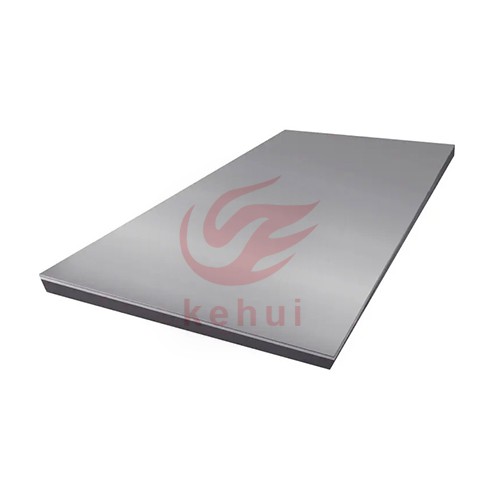

When it comes to forming zirconium plates, different forming processes can be used. Stamping is a common process where a die is used to press the plate into a specific shape. This process can be used for making small to medium - sized components. Roll forming is another option, which is great for creating long, continuous shapes like tubes or channels. For more complex shapes, hydroforming might be the way to go. Hydroforming uses high - pressure fluid to shape the plate against a mold.
In conclusion, the formability of zirconium plate is influenced by several factors, including its crystal structure, purity, thickness, and the forming process used. While zirconium can be a bit challenging to form due to its HCP structure, with the right techniques such as heat treatment and by choosing the appropriate product, we can achieve excellent formability.
If you're in the market for zirconium plates and have questions about formability or need help choosing the right product for your application, don't hesitate to reach out. We're here to assist you in making the best decision for your project. Whether you need a high - purity zirconium sheet or an alloy plate, we've got you covered. Contact us to start a procurement discussion and let's work together to get you the perfect zirconium plate for your needs.
References:
- "The Physics of Metals: Volume 1: Structure and Thermodynamics" by R. W. Cahn
- "Metal Forming: Mechanics and Metallurgy" by Dieter, G. E.