


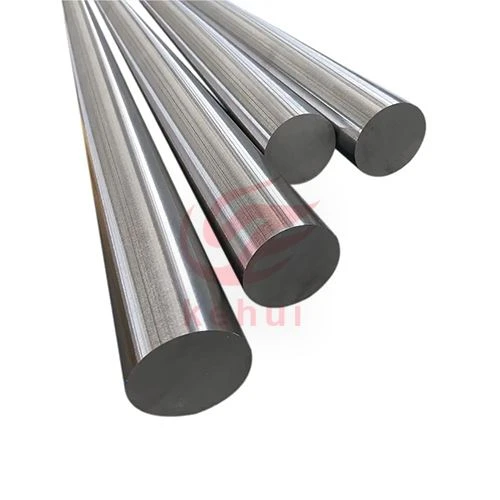
Zr702 zirconium bar is a remarkable material known for its excellent corrosion resistance, high melting point, and low neutron absorption cross - section. These properties make it highly sought - after in various industries, including nuclear, chemical processing, and aerospace. As a Zr702 zirconium bar supplier, I understand the importance of choosing the right welding methods to ensure the integrity and performance of the welded joints. In this blog, I will discuss several welding methods suitable for Zr702 zirconium bar.
Tungsten Inert Gas (TIG) Welding
TIG welding, also known as Gas Tungsten Arc Welding (GTAW), is one of the most commonly used methods for welding Zr702 zirconium bar. This process uses a non - consumable tungsten electrode to create an arc between the electrode and the workpiece. An inert gas, typically argon, is used to shield the weld area from atmospheric contamination.
One of the main advantages of TIG welding for Zr702 zirconium bar is its ability to provide precise control over the welding process. The operator can easily adjust the heat input, arc length, and welding speed, which is crucial for achieving high - quality welds. TIG welding produces clean, high - strength welds with minimal distortion, making it ideal for applications where dimensional accuracy is important.
However, TIG welding has some limitations. It is a relatively slow process, which may not be suitable for large - scale production. Additionally, it requires a high level of skill from the operator to ensure consistent weld quality.

Plasma Arc Welding (PAW)
Plasma arc welding is another suitable method for welding Zr702 zirconium bar. PAW is similar to TIG welding, but it uses a constricted arc to increase the energy density and welding speed. The plasma arc is created by passing an inert gas through a small orifice in the welding torch, which constricts the arc and increases its temperature and velocity.
PAW offers several advantages over TIG welding. It has a higher welding speed, which can significantly reduce production time. The constricted arc also provides better penetration and a more focused heat source, resulting in narrower weld beads and less heat - affected zone. This is beneficial for maintaining the mechanical properties of the Zr702 zirconium bar.
On the other hand, plasma arc welding equipment is more complex and expensive than TIG welding equipment. It also requires more precise control of the welding parameters, and the operator needs to have a good understanding of the process to achieve optimal results.
Electron Beam Welding (EBW)
Electron beam welding is a high - energy welding process that uses a focused beam of electrons to melt and join the Zr702 zirconium bar. The electrons are accelerated to high speeds in a vacuum chamber and directed onto the workpiece, where they transfer their energy to the material, causing it to melt.
EBW has several unique advantages. It can produce very deep and narrow welds with minimal heat - affected zone, which is essential for maintaining the integrity of the Zr702 zirconium bar. The process is also highly automated, which ensures consistent weld quality and high productivity. EBW is suitable for welding thick sections of Zr702 zirconium bar and can be used for applications that require high - strength and reliable welds.
However, electron beam welding requires a vacuum chamber, which adds to the cost and complexity of the process. The equipment is also expensive, and the process is sensitive to the presence of contaminants on the workpiece surface.
Laser Beam Welding (LBW)
Laser beam welding is a modern welding method that uses a high - intensity laser beam to melt and join the Zr702 zirconium bar. The laser beam is focused onto the workpiece, and the energy from the laser is absorbed by the material, causing it to melt and form a weld.
LBW offers several benefits for welding Zr702 zirconium bar. It has a high welding speed, which can improve productivity. The laser beam can be precisely controlled, allowing for welding in difficult - to - reach areas and producing very small and precise welds. Laser beam welding also produces minimal distortion and a small heat - affected zone, which helps to preserve the mechanical properties of the Zr702 zirconium bar.
One of the challenges of laser beam welding is the high cost of the equipment. Additionally, the process requires careful control of the laser parameters and the surface condition of the workpiece to ensure good weld quality.
Considerations for Welding Zr702 Zirconium Bar
When choosing a welding method for Zr702 zirconium bar, several factors need to be considered.
Material Purity: Zr702 zirconium bar is a pure zirconium material, and any contamination during the welding process can significantly affect the properties of the weld. Therefore, it is essential to use high - purity shielding gases and keep the workpiece and welding equipment clean.
Pre - Weld Preparation: Proper pre - weld preparation is crucial for achieving high - quality welds. This includes cleaning the surface of the Zr702 zirconium bar to remove any oxides, oils, or other contaminants. Edge preparation, such as beveling the edges of the bar, can also improve the weld quality and penetration.
Welding Parameters: Each welding method has its own set of optimal welding parameters, such as heat input, welding speed, and gas flow rate. These parameters need to be carefully selected and controlled to ensure the integrity of the weld.
Post - Weld Treatment: After welding, post - weld treatment may be required to relieve residual stresses and improve the mechanical properties of the weld. This can include heat treatment or stress - relieving processes.
Conclusion
As a Zr702 zirconium bar supplier, I know that choosing the right welding method is crucial for the success of your projects. Tungsten Inert Gas (TIG) welding, Plasma Arc Welding (PAW), Electron Beam Welding (EBW), and Laser Beam Welding (LBW) are all suitable methods for welding Zr702 zirconium bar, each with its own advantages and limitations.
If you are interested in purchasing Zr702 Zirconium Bar or need more information about welding methods for zirconium materials, feel free to contact us. We can also provide you with details about our Zr705 Zirconium Bar and Zr702 Zirconium Rod products. We are committed to providing high - quality zirconium materials and professional technical support to meet your specific needs.
References
- ASM Handbook, Volume 6: Welding, Brazing, and Soldering
- Welding Handbook, American Welding Society
- Research papers on zirconium welding in international materials science journals